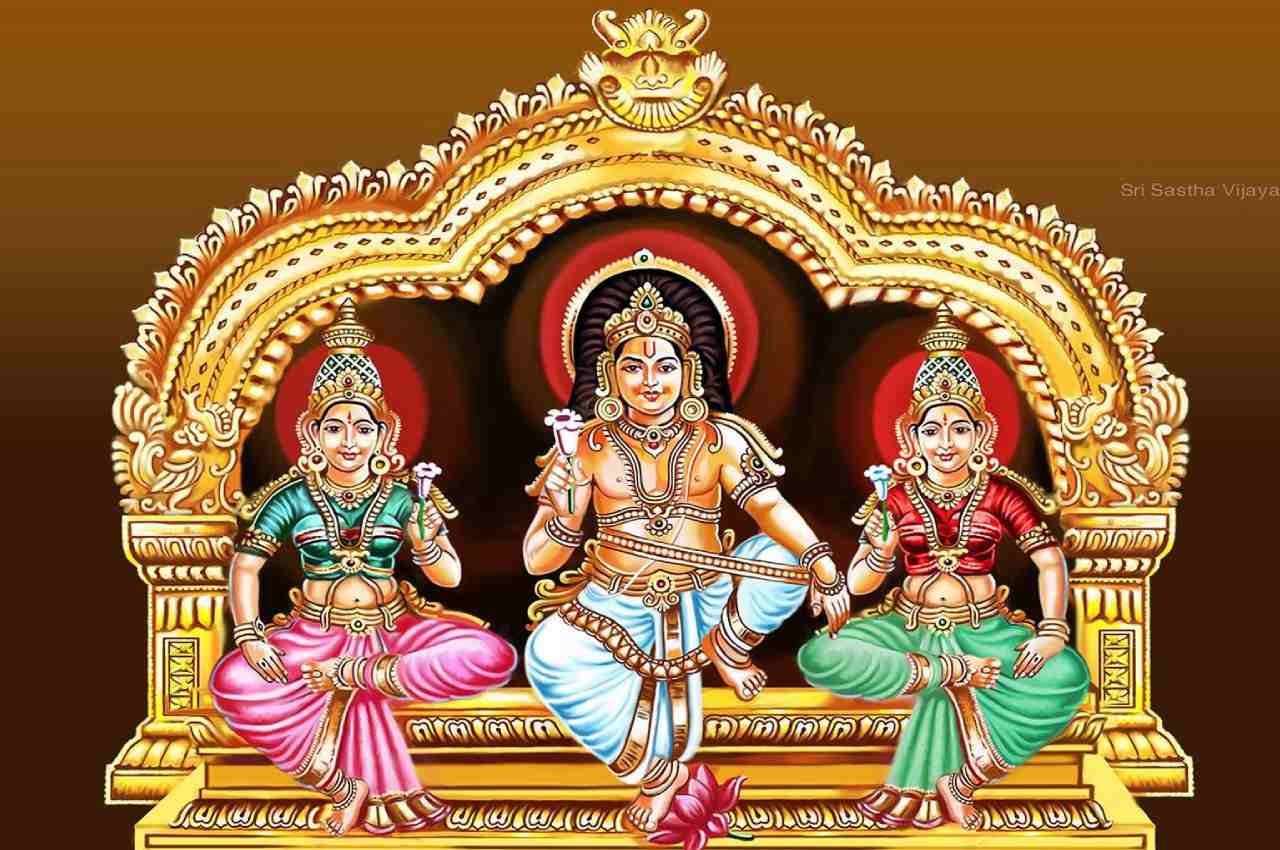
Royal Youth Form 01
1. Aryankavu
Located 20 km from Sengottai in Kerala, where Lord Ayyappan is worshipped in regal form alongside Devi Pushkala.
According to sacred tradition, the demoness Mahishi secured a boon that she could only be vanquished by a divine child born of the union of Lord Shiva and Lord Vishnu. Answering the prayers of the Devas, Lord Ayyappan incarnated as Hariharaputra—the radiant harmony of Shaiva and Vaishnava grace.
Found as a radiant infant by the banks of the holy River Pamba wearing a golden bell around His neck, He was lovingly raised by King Rajasekhara of Pandalam as Manikantan. After fulfilling His divine purpose and liberating Mahishi, Lord Ayyappan chose to reside at Sabarimala in the serene yogic Chinmudra posture, blessing all seekers of truth and dharma.
The highest message inscribed above the Sabarimala sanctum—recognizing the same divine presence within every being.
A 41-day Mandala Vridham transforms body, speech, and mind through simplicity, humility, and restraint.
Speaking gently, renouncing anger, and living in complete surrender with the sacred chant 'Swamiye Saranam Ayyappa'.
Wearing the sacred Mala under a Guru's blessing and preparing the Irumudi with devotion at home before the pilgrimage.
Just as Lord Murugan has Arupadai Veedu, Lord Dharma Sastha is revered across six sacred abodes.
Located 20 km from Sengottai in Kerala, where Lord Ayyappan is worshipped in regal form alongside Devi Pushkala.
Nestled amidst dense forests, revered as an ancient shrine attributed to Sage Parasurama, depicting Sastha with Poorna and Pushkala.
Located 50 km from Sengottai in Kerala, where the Lord is worshipped in the tender child form of Bala Sastha.
Famous for the sacred Petta Thullal tradition, portraying Lord Ayyappan bearing bow and arrow as the protector of devotees.
Located on the banks of the Achankovil river, where Lord Ayyappan was raised and where the sacred Thiruvabharanam ornaments are preserved.
The supreme hilltop sanctuary ascended via the 18 Holy Steps, where Lord Ayyappan graces devotees in Chinmudra.
Significance of Mandala Vridham and Traditional Spiritual Disciplines for All Devotees
Swamiye Saranam Ayyappa!
The sacred pilgrimage to Sabarimala to seek the darshan of Lord Sri Ayyappan—revered as the Lord of the Universe, Hariharaputra, and the embodiment of Dharma—is a holy spiritual journey embodying supreme devotion and absolute surrender.
The true sanctity of the Sabarimala pilgrimage lies not merely in reaching the holy sanctum, but in purifying the mind, controlling the senses, shedding ego, and cultivating love, humility, discipline, equality, and righteous conduct through devout austerity.
The 48-day Mandala Vridham traditionally observed by all devotees is a profound spiritual discipline fostering purity and restraint in body, mind, speech, and action. Observing these sacred disciplines with steadfast faith and guidance from an experienced Guruswami brings immense spiritual grace.
Observing the sacred Mala Dharanam on the 1st day of the Tamil month of Karthigai is an auspicious and time-honored tradition. All devotees undertaking the Sabarimala pilgrimage should plan according to their travel date and meticulously observe the 48-day Mandala Vridham under the spiritual guidance of an experienced Guruswami.
Wearing the Mala signifies surrendering oneself at the lotus feet of Lord Sri Ayyappan, renouncing worldly attachments, and embarking upon a life of sacred discipline and devotion.
It is traditional custom to wear a Tulasi or Rudraksha mala featuring a pendant of Lord Sri Ayyappan, blessed by an experienced Guruswami or temple priest. Devotees may also receive the mala with the blessings of parents at the home altar following family tradition.
Wearing the holy mala is not merely an outward symbol, but a sacred covenant to uphold purity in thought, word, and deed, keeping the divine name of Lord Ayyappan ever resident in the heart.
During the austerity period, devotees wake up before dawn, bathe in cold water, wear clean attire, and offer heartfelt prayers to Lord Ayyappan. In the evening, bathing again, lighting the sacred lamp, and chanting divine names is traditional practice.
Chant the sacred mantra “Swamiye Saranam Ayyappa” with heartfelt reverence, engaging in nama japa, devotional bhajans, meditation, and spiritual worship. Days spent in divine remembrance nurture profound inner peace and spiritual maturity.
Throughout the vridham period, wear simple black, blue, or traditional saffron/ochre garments, embracing an unpretentious and humble lifestyle.
Observe strict celibacy (Brahmacharya), exercising control over thoughts and senses, staying free from ill intentions, unwanted desires, and unrighteous actions. Preserving mental purity alongside physical discipline forms the bedrock of this austerity.
One of the highest virtues of Ayyappa devotion is treating all fellow beings with boundless love and genuine equality.
Avoid anger, hostility, jealousy, arrogance, deceit, harsh words, and hurt towards others. Conduct oneself with humility and respect towards parents, elders, family members, neighbors, and fellow devotees.
Transcending caste, creed, language, and economic status, addressing all devotees as ‘Swami’ reflects universal brotherhood and spiritual unity.
Showing compassion to all living beings and living without causing harm to anyone is the truest path of Dharma.
Devotees must adhere to clean, satvik, and simple vegetarian food consumed in moderation, observing self-control in eating habits.
Strictly avoid non-vegetarian food, alcohol, tobacco, and all forms of intoxicants. Limiting culinary luxuries and following a simple, body-and-mind nourishing diet is recommended.
Some devotees observe single-meal fasts or specific dietary traditions according to family customs. However, these are not strictly mandatory for all; fasts should be adapted keeping health, age, and medical requirements in view.
Renounce worldly luxuries and cultivate simplicity, cleanliness, self-restraint, and constant remembrance of the divine.
Traditional austerities include refraining from haircuts or shaving, sleeping on a mat on the floor, and walking barefoot.
While observing these disciplines, keep health, hygiene, age, and individual physical conditions in balance. Cultivating internal purity and surrender is far more important than mere physical penance.
Engaging in benevolent charities alongside spiritual worship holds exceptional merit during the vridham.
Feed the hungry, perform Annadhanam to the best of one's ability, assist the needy, honor elders, and demonstrate kindness towards animals and all living beings.
True devotion to the Lord must be expressed through compassion and selfless service to humanity.
All devotees embarking on the pilgrimage, particularly first-time pilgrims (Kanni Swamis), must seek the counsel and blessings of an experienced Guruswami to understand vridham rules, rituals, and pilgrimage customs.
Upon completing the Mandala Vridham, preparing the sacred Irumudi (two-compartment cloth bag) containing ghee coconut and puja offerings under Guruswami's direction is a sacred rite, carried reverently on the head to Sabarimala Sannidhanam.
During the Sabarimala journey, maintain utmost patience, humility, disciplined conduct, and readiness to help fellow pilgrims.
Protect the sanctity and cleanliness of the sacred Pamba river, forest trekking routes, and the holy Sannidhanam. Never litter plastics or waste in natural habitats; preserving nature is the sacred duty of every devotee.
Strictly abide by the darshan, travel, and security protocols announced by the Sabarimala Temple Administration and government authorities.
“Wearing the Mala is the beginning of devotion; observing the Vridham is the mark of discipline; carrying the Irumudi is the expression of dedication; beholding Lord Ayyappan is the sacred experience of total surrender.”
The true glory of the Sabarimala pilgrimage lies not merely in ascending the sacred hill to behold the deity, but in purging arrogance, anger, envy, and negative thoughts, while cultivating love, peace, humility, truthfulness, equality, and righteousness.
Ayyappa Vridham is not a discipline observed for a few days only; it is a profound spiritual schooling for living righteously throughout one's life.
By the divine grace of Lord Sri Dharma Sastha, may faith flourish in the heart of every devotee, bringing lasting peace, harmony, and righteous virtues to their families.
All devotees undertaking the Sabarimala pilgrimage are lovingly requested to honor traditional Mandala Vridham disciplines, follow the spiritual guidance of experienced Guruswamis, and comply with current directives issued by the Sabarimala temple administration.
Let us observe the Vridham with devotion! Worship the Lord with humility! Walk the path of Dharma!
Loka Veeram Maha Poojyam, Sarva Rakshakaram Vibhum Parvathi Hrudayanandam, Saasthaaram Pranamamyaham Swamiye Saranam Ayyappa!
I bow to Lord Sastha—the supreme hero of the worlds, worthy of universal worship, protector of all beings, and the delight of Goddess Parvathi's heart.
Viprapoojyam Viswa Vandhyam, Vishnu Shambho Priyam Sutham Kshipra Prasada Niratham, Saasthaaram Pranamamyaham Swamiye Saranam Ayyappa!
I bow to Lord Sastha—revered by Vedic scholars, adored by the universe, beloved son of Vishnu and Shiva, and ever swift to bestow grace.
Matha Mathanga Gamanam, Karunyamrutha Pooritham Sarva Vigna Haram Devam, Saasthaaram Pranamamyaham Swamiye Saranam Ayyappa!
I bow to Lord Sastha—whose majestic gait resembles a royal elephant, who overflows with the nectar of mercy, and who removes all obstacles.
Asmath Kuleshwaram Devam, Asmath Shathru Vinasanam Asmath Ishta Pradhatharam, Saasthaaram Pranamamyaham Swamiye Saranam Ayyappa!
I bow to Lord Sastha—Lord of our lineage, vanquisher of inner and outer negativity, and fulfiller of righteous aspirations.
Pandyesha Vamsa Thilakam, Kerale Keli Vigraham Aartha Thranaparam Devam, Saasthaaram Pranamamyaham Swamiye Saranam Ayyappa!
I bow to Lord Sastha—jewel of the Pandya lineage, who manifested His divine play in Kerala, and who is the unfailing refuge of the distressed.
Traditional devotional song lyrics preserved for all devotees.
Angum Iruppar Ingum Iruppar Engume Iruppar Ayyappan Lyrics In Tamil
Read Lyrics →Pullanguzhal Kodutha Moongilgale Lyrics in Tamil
Read Lyrics →Pamba Nadhikarayil Lyrics In Tamil
Read Lyrics →Saranam Saranam Ganesha Yei Ganesha Lyrics In Tamil
Read Lyrics →Swamy Saranam Endral Manashanthi Lyrics In Tamil
Read Lyrics →